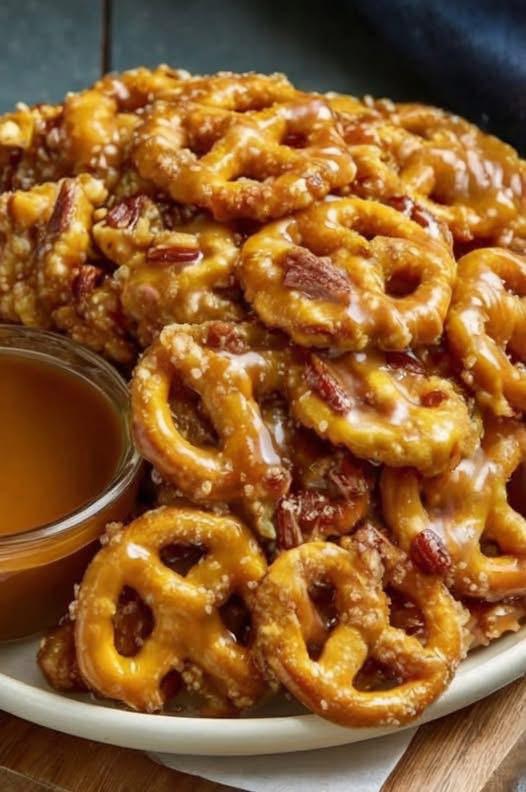
Pretzels
Introduction
Pretzels are a beloved baked good known for their distinctive twisted shape, chewy interior, and golden-brown crust. Whether enjoyed soft and warm or baked until crisp, pretzels strike a satisfying balance between simplicity and indulgence. Their mild flavor makes them versatile, pairing well with both sweet and savory accompaniments.
Origin and Cultural Significance
Pretzels are believed to have originated in early medieval Europe, particularly among monks in what is now Germany or Italy. According to legend, monks shaped dough into twisted knots to resemble arms crossed in prayer, offering them as rewards to children who memorized prayers.
Over time, pretzels became deeply rooted in German culture, especially in Bavaria, where soft pretzels are traditionally enjoyed with mustard, sausages, and beer. German immigrants later introduced pretzels to the United States, where they became especially popular in Pennsylvania, now a major hub for pretzel production.
Description
A classic pretzel features a glossy, deep golden crust with a chewy, bread-like center. The surface is lightly crisp, often topped with coarse salt, while the inside remains soft and tender. Pretzels can be shaped traditionally or made into sticks, bites, or knots, and served plain or flavored.
Ingredients Quantity (Classic Soft Pretzels – Makes 8)
- 3 ½ cups (440 g) all-purpose flour
- 1 cup (240 ml) warm water
- 2 ¼ tsp (7 g) active dry yeast
- 2 tbsp sugar
- 1 tsp salt
- 2 tbsp unsalted butter or vegetable oil
- ⅓ cup baking soda (for boiling solution)
- Coarse salt for topping
Optional Additions
- Cheese (cheddar, mozzarella, or parmesan)
- Cinnamon sugar topping
- Garlic powder or herbs
- Sesame or poppy seeds
- Butter glaze
- Chocolate drizzle (for sweet pretzels)
Tips for Success
- Ensure water is warm, not hot, to properly activate yeast
- Knead dough until smooth and elastic for the best chew
- Do not skip the baking soda bath—it gives pretzels their signature color and flavor
- Use coarse salt sparingly to avoid overpowering the taste
- Bake until deep golden brown for optimal texture
Instructions
- Dissolve yeast and sugar in warm water; let stand until foamy (5–10 minutes).
- Add flour, salt, and butter; knead until smooth.
- Cover and let dough rise until doubled (about 1 hour).
- Divide dough into portions and roll into long ropes; twist into pretzel shapes.
- Bring water and baking soda to a boil. Briefly boil each pretzel (20–30 seconds).
- Place on a lined baking sheet, sprinkle with salt.
- Bake at 220°C (425°F) for 12–15 minutes until golden brown.
- Cool slightly before serving.
Nutritional Information (Approximate per Soft Pretzel)
- Calories: 220–250 kcal
- Carbohydrates: 45 g
- Protein: 7 g
- Fat: 3 g
- Fiber: 2 g
- Sodium: varies depending on salt topping
Conclusion
Pretzels are a timeless baked good that blend tradition, flavor, and comfort. Their simple ingredients and satisfying texture have allowed them to endure across centuries and cultures, making them a staple snack enjoyed worldwide.
Recommendation
Pretzels are best enjoyed fresh and warm, paired with mustard, cheese dip, or a sweet glaze. They make an excellent snack for gatherings, school lunches, or casual meals, and can be easily customized to suit personal tastes.
Embracing Healthful Indulgence
While pretzels are often considered a treat, they can be enjoyed mindfully as part of a balanced diet. Using whole wheat flour, reducing salt, or baking instead of frying enhances their nutritional value. When enjoyed in moderation, pretzels offer a comforting indulgence without excessive richness.