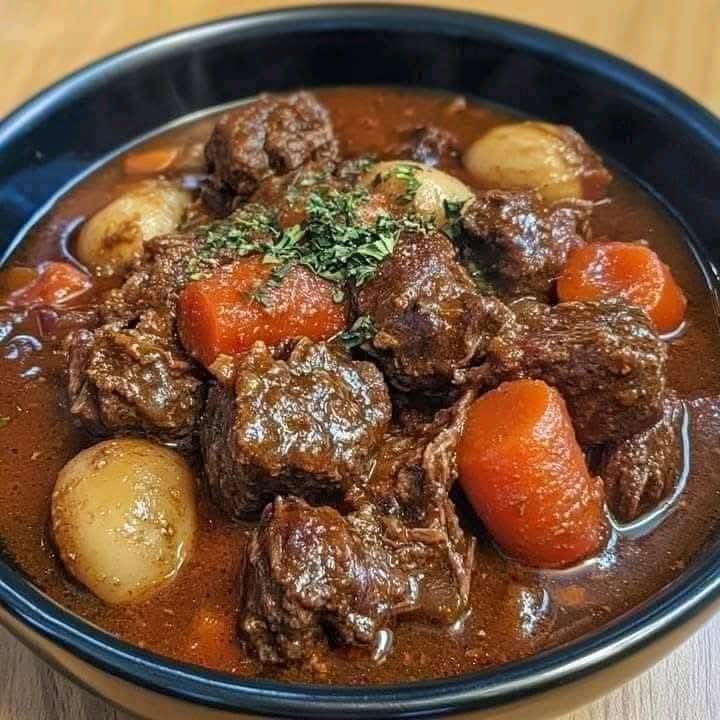
Of course. This is a classic, hearty recipe for Old Fashioned Beef Stew, the kind that simmers for hours and fills your kitchen with an incredible aroma. This recipe focuses on deep flavor, tender meat, and rich gravy.
The Secret to the Best Old Fashioned Beef Stew:
The key step that sets this recipe apart is browning the meat properly and cooking the tomato paste. Don’t rush these steps! They create a foundation of rich, caramelized flavor that you can’t get otherwise.
Old Fashioned Beef Stew Recipe
This recipe yields a thick, hearty stew that’s even better the next day.
Ingredients:
· 2 ½ – 3 lbs beef chuck roast, cut into 1 ½-inch cubes
· 3 tbsp all-purpose flour
· 1 ½ tsp salt, plus more to taste
· 1 tsp black pepper, plus more to taste
· 3 tbsp olive oil or vegetable oil
· 1 large yellow onion, chopped
· 4 cloves garlic, minced
· 2 tbsp tomato paste
· 1 cup dry red wine (like Cabernet Sauvignon or Merlot) or additional beef broth
· 4 cups low-sodium beef broth
· 2 bay leaves
· 1 tbsp Worcestershire sauce
· 1 tsp dried thyme or 3 sprigs fresh thyme
· 4 large carrots, peeled and cut into 1-inch chunks
· 3 large russet potatoes, peeled and cut into 1-inch chunks
· 2 celery ribs, cut into ½-inch pieces (optional, but classic)
· 1 cup frozen peas (added at the end)
· Chopped fresh parsley, for garnish
Instructions:
- Prep the Beef: Pat the beef cubes completely dry with paper towels (this is crucial for browning). In a large bowl, toss the beef cubes with the flour, 1 ½ tsp salt, and 1 tsp pepper until evenly coated.
- Brown the Meat: In a large Dutch oven or heavy-bottomed pot, heat 2 tablespoons of oil over medium-high heat. Working in batches to avoid crowding the pot, add the beef and sear on all sides until a dark brown crust forms, about 5-7 minutes per batch. Don’t rush this. Transfer browned meat to a plate and set aside.
- Sauté Aromatics: Reduce heat to medium. Add the remaining 1 tbsp of oil to the pot. Add the chopped onion and cook until softened, about 5 minutes. Add the garlic and cook for another minute until fragrant.
- Cook the Tomato Paste: Push the onions to the side. Add the tomato paste to the center of the pot and cook for 1-2 minutes, stirring constantly, until it darkens slightly. This deepens its flavor and removes any “tinny” taste.
- Deglaze: Pour in the red wine, scraping the bottom of the pot with a wooden spoon to release all the flavorful browned bits (this is called fond). Let it simmer for 2-3 minutes until reduced by about half.
- Simmer: Return the browned beef and any accumulated juices to the pot. Add the beef broth, bay leaves, Worcestershire sauce, and thyme. The liquid should just barely cover the meat. Bring to a boil, then immediately reduce the heat to low.
- Low and Slow Cooking: Cover the pot with a lid, leaving it slightly ajar. Simmer gently for 1 ½ hours.
- Add Vegetables: After 1 ½ hours, add the carrots, potatoes, and celery (if using). Stir to submerge them in the liquid. Bring back to a simmer, cover (slightly ajar again), and cook for another 45 minutes to 1 hour, or until the vegetables are tender and the meat is fork-tender.
- Final Touches: Remove and discard the bay leaves (and thyme sprigs if using fresh). Stir in the frozen peas and let them heat through for about 5 minutes. Taste and adjust seasoning with more salt and pepper as needed.
- Serve: Ladle into bowls and garnish with fresh chopped parsley. Serve with crusty bread for dipping.
Key Tips for Success:
· The Right Cut: Chuck roast is ideal because it’s well-marbled with fat. This collagen breaks down during the long, slow cooking process, making the meat incredibly tender and enriching the stew.
· Don’t Crowd the Pan: Browning the meat in batches is non-negotiable. Crowding the pan steams the meat instead of searing it, and you’ll miss out on all that flavor.
· Low and Slow: A gentle simmer is key. Boiling the stew will make the meat tough and dry.
· Thickening: The flour on the meat will naturally thicken the stew. If you prefer it even thicker, you can make a slurry: mix 2 tablespoons of cornstarch with 2 tablespoons of cold water. Stir this into the simmering stew during the last 10 minutes of cooking.
· Make it Ahead: Stew is always better the next day! The flavors have time to meld together perfectly. Let it cool completely and store it in the refrigerator for up to 3 days.
Enjoy your comforting, classic meal