Introduction & Description
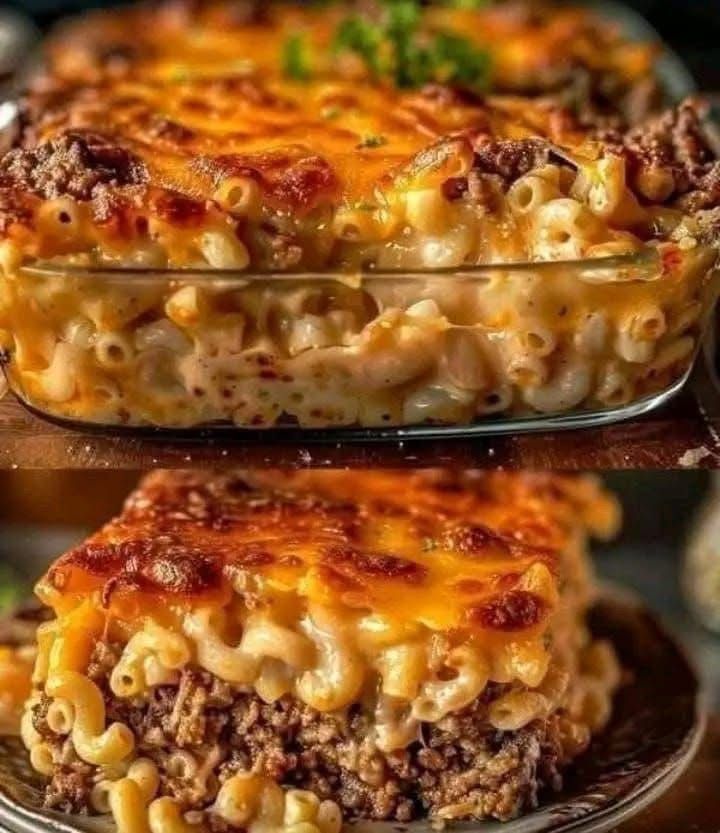
Macarrones con queso y pastel de carne al horno is a comforting, hearty combination of two beloved home‑style dishes: creamy macaroni and cheese paired with a savory baked meatloaf. The rich, cheesy pasta complements the meaty, savory loaf, making it a satisfying, balanced meal that delivers on both flavor and texture. This dish is especially appealing for family dinners, potlucks, or any occasion when you want warmth, familiarity, and fullness in one plate.
The macaroni and cheese portion is creamy, cheesy, and indulgent, while the meatloaf adds protein, savory depth, and a bit of rustic charm. Together, they create a “comfort food duet” that appeals to many palates.
Origin & Cultural Significance
Macaroni and Cheese (Mac & Cheese)
- The idea of combining pasta and cheese dates back centuries. A 13th‑century Latin cookbook Liber de Coquina describes mixing pasta with grated cheese.
- In 1769, an English cookbook The Experienced English Housekeeper included a recipe for macaroni with cheese sauce.
- Thomas Jefferson is often credited with popularizing macaroni and cheese in the U.S. after encountering pasta dishes in Europe; he apparently imported a pasta machine and served “macaroni” at a state dinner in 1802.
- The boxed version of mac & cheese (Kraft) was introduced in 1937, becoming a hugely popular, inexpensive, and convenient meal during the Great Depression.
- Over time, in North America, mac & cheese became a staple of home cooking, soul food, school cafeterias, and comfort food culture.
Meatloaf (Pastel de Carne)
- Meatloaf is a baked or smoked dish made from ground meat (often beef) and other ingredients, shaped into a loaf.
- Its roots stretch across many regions. In Europe, dishes like Germany’s “Hackbraten,” Flemish and Nordic versions, and Central European meat loaves predate modern American meatloaf.
- In North America, meatloaf gained popularity particularly during times of economic hardship (e.g. the Great Depression) because it allows the combination of ground meat with fillers (bread, oatmeal, vegetables) to stretch portions and reduce cost.
- Over years, meatloaf became emblematic of “home cooking,” Sunday dinners, and nostalgic family meals in American households.
Because both mac & cheese and meatloaf have strong roots in comfort food traditions, combining them is a natural pairing in regions where hearty American/Western comfort food is embraced. In other cultural settings, adaptations (with local cheeses, spices, or types of meat) make the dish more regionally relevant.
Ingredients (Base Quantities)
Here is a suggested ingredient list and quantities for serving about 6 to 8 people (you can scale up or down):
Mac & Cheese Portion
- 2 cups (≈ 200 g) dry macaroni or similar pasta (or “macarrones”)
- 2 to 3 cups milk (whole milk or partly cream)
- 1 cup heavy cream (or half‑and‑half)
- 2 tbsp (≈ 30 g) unsalted butter
- 2 tbsp flour (all-purpose) (for béchamel)
- 2 cups (≈ 200 g) shredded cheese (e.g. cheddar, mozzarella, or a blend)
- ½ to 1 cup grated Parmesan (optional, for extra flavor)
- Salt and pepper, to taste
- Pinch of nutmeg (optional)
- Breadcrumbs or crushed crackers (for topping, optional)
Meatloaf (Pastel de Carne) Portion
- 1 lb (450 g) ground beef (or a mix of beef + pork)
- 1 small onion, finely chopped
- 2 cloves garlic, minced
- 1 egg
- ½ cup breadcrumbs (or soaked bread)
- ¼ to ½ cup milk (or broth)
- 1 tbsp Worcestershire sauce (optional)
- 1 tbsp ketchup or tomato paste (optional)
- Salt and pepper, to taste
- Herbs/spices: e.g. parsley, thyme, paprika (optional)
- Glaze (optional): ketchup, BBQ sauce, or tomato sauce on top
If you like, you can include vegetables (grated carrot, zucchini, bell pepper) to add moisture and nutrition.
Optional Additions & Variations
- Cheese varieties: Use stronger cheeses like Gruyère, fontina, Gouda, or pepper jack for more depth.
- Spicy twist: Add diced jalapeños, red pepper flakes, or hot sauce to either component.
- Vegetables: Stir in cooked peas, spinach, broccoli, mushrooms, or roasted peppers into the macaroni before baking.
- Meat mix: Use part pork, veal, or lamb in meatloaf to vary flavor and texture.
- Flavor boosters: Add mustard, soy sauce, barbecue sauce, or herbs (rosemary, thyme) to the meatloaf.
- Crunch topping: For the macaroni, top with breadcrumbs or crushed crackers mixed with melted butter and bake for a crisp crust.
- Glazed meatloaf: Brush ketchup, BBQ sauce, or a mix of tomato sauce + brown sugar on top before final baking.
- Low-fat versions: Use lean ground meat, low-fat milk, or reduce cheese, balancing with extra seasoning to maintain flavor.
Tips for Success
- Prevent dry macaroni: Cook pasta slightly less than al dente, since it will continue to soften in the sauce/baking.
- Make a smooth béchamel: When making the roux (butter + flour), whisk thoroughly to avoid lumps before adding milk/cream.
- Temper milk: When adding milk to the roux, add gradually while whisking to maintain smoothness.
- Mix meatloaf gently: Overworking ground meat causes tough texture. Use your hands or spoon just until combined.
- Moisture retention: Use soaked breadcrumbs, a bit of milk, or grated vegetables in meatloaf to keep it juicy.
- Internal doneness: For meatloaf, aim for internal temperature of ~160 °F (71 °C) for ground beef.
- Resting time: Let the meatloaf rest 10–15 minutes after baking before slicing. This helps juices redistribute and prevents crumbling.
- Layering: You can layer the mac & cheese and meatloaf in a casserole dish (meatloaf beneath, macaroni over) or serve side by side.
- Make ahead: You can assemble both parts ahead of time and bake just before serving.
- Balance richness: Serve with a fresh salad or steamed vegetables to cut through the richness.
Instructions (Step‑by‑Step)
Here’s a combined method that coordinates both components:
- Preheat oven: Preheat your oven to 180 °C (350 °F).
- Cook the pasta: Bring a large pot of salted water to boil. Add macaroni, cook until just under al dente (about 1–2 minutes less than package time). Drain and set aside.
- Prepare the cheese sauce (béchamel → cheese):
a. In a saucepan, melt butter over medium heat.
b. Stir in flour, whisking for ~1 minute to make a roux.
c. Gradually whisk in milk and cream until smooth.
d. Cook gently until the sauce thickens (coats the back of a spoon).
e. Add shredded cheeses and Parmesan, whisking until melted and smooth. Season with salt, pepper, and optional nutmeg. - Combine pasta and sauce: Toss the drained macaroni into the cheese sauce until well coated.
- Prepare the meatloaf mixture:
a. In a bowl, combine ground meat, chopped onion, garlic, egg, breadcrumbs, milk, Worcestershire sauce, ketchup (if using), salt, pepper, and herbs.
b. Mix gently until just combined. - Shape meatloaf & place in dish: Lightly grease a loaf pan (or use a baking tray). Shape the meat mixture into a loaf form (or press into the pan). Optionally, make a small indent in the center (to reduce doming) or form into a flat rectangle for more surface.
- (Optional) Glaze: Brush the top of the meatloaf with ketchup, tomato sauce, or BBQ sauce.
- Bake: Place the meatloaf in the preheated oven. Bake about 45–60 minutes (depending on size and oven) until the meatloaf is cooked through (internal ~160 °F / 71 °C). If you like, you can put the macaroni + cheese (in a separate baking dish) in the oven for the last 15–20 minutes to get a golden top or crisp crust.
- Rest: Remove meatloaf, let rest 10–15 minutes before slicing. This helps keep it moist and easier to slice cleanly.
- Serve: Plate slices of meatloaf alongside or atop the mac & cheese. Garnish with fresh parsley, chives, or extra cheese as desired.
Nutritional Information (Estimate)
Because recipes vary greatly by cheese type, meat fat content, added ingredients, and portion size, the following are approximate estimates for one serving (assuming 6–8 servings total). Use this as a rough guide:
Meatloaf
- A medium slice (≈ 100–120 g) of traditional beef meatloaf contains around ~ 220 kcal, 13 g fat, 7 g carbohydrate, and 17 g protein.
- Another source suggests a 5 oz slice has ~280 kcal, with ~15 g fat, ~24 g protein, ~10 g carbs.
- The nutrition will increase if you use richer meats, more cheese, glazes, or extras.
Mac & Cheese Component
- A typical creamy, cheesy macaroni serving (about 1 cup) can range from ~300 to 450+ kcal depending on cheese, cream, butter, and portion size.
- The fat and saturated fat can be high due to cheese and cream.
Combined Estimate (per plate)
If you combine a slice of meatloaf + about 1 cup of mac & cheese:
- Calories: ~ 500–700 kcal (depending on how rich the mac & cheese is)
- Protein: ~ 25–35 g
- Fat: ~ 20–35 g (with saturated fat making up a portion)
- Carbohydrates: ~ 25–50 g (from pasta, milk, breadcrumbs)
- Fiber: modest (depending on if whole grain pasta or vegetables are added)
- Sodium can be moderate to high depending on added salt, cheese, sauces, and processed ingredients.
If you want a precise nutritional breakdown (for your exact ingredient choices), I recommend using a nutrition‑calculator or app with your ingredient list.
Conclusion & Recommendation
Conclusion:
Macarrones con queso y pastel de carne al horno** is a comforting, crowd-pleasing, hearty dish that brings together the best of creamy pasta and savory meat in a homey, satisfying way. The macaroni and cheese provides richness, creaminess, and a touch of decadence, while the meatloaf brings substance, protein, and flavor depth. Together, they make a balanced plate that appeals to both kids and adults.
Recommendation:
- Use high-quality cheese(s) for the mac & cheese — sharper cheddar or a blend yields better flavor.
- Choose a moderately fatty ground meat (e.g. 80/20 beef or a beef/pork blend) for juiciness — too lean and the meatloaf can dry out.
- Don’t skip the resting period for the meatloaf — it helps with texture and slicing.
- Serve with a fresh side (salad, steamed vegetables, or greens) to lighten the meal and add fiber and freshness.
- If making ahead, you can bake the meatloaf ahead and reheat slices, or reheat the mac & cheese gently (cover to prevent drying).
- For healthier variants, use reduced-fat milk, lower-fat cheeses, leaner meat, add vegetables, or reduce added fats — but adjust seasoning to keep it tasty.
Embracing Healthful Indulgence
While this dish is indulgent, you can adopt modifications to make it more healthful without losing much flavor:
- Use whole-wheat or high-protein pasta to raise fiber content.
- Substitute part of the heavy cream with milk or a lighter cream alternative (such as half‑and‑half or low-fat milk) in the cheese sauce.
- Use a reduced-fat cheese or blend of full-fat and low-fat cheese to cut fat.
- Include vegetables (e.g., spinach, broccoli florets, peas, mushrooms) in the macaroni to increase micronutrients, color, and volume.
- In the meatloaf, add grated vegetables (zucchini, carrot) or fine-cooked grains (oats, bulgur) to reduce total meat amount and increase fiber.
- Use leaner ground meats (e.g. 90/10 beef, turkey, or a combination) while preserving moisture via breadcrumbs soaked in milk or broth.
- Control portion sizes, and complement with a fresh, low-calorie side (green salad, steamed vegetables, or a vinaigrette-dressed side) to balance richness.